Acne Skincare Routine: How to Effectively Care for Acne-Prone Skin and Prevent Dark Spots

Introduction: Acne Skincare Routine for Clear, Healthy Skin
An effective acne skincare routine is the foundation for achieving clear, balanced skin and preventing stubborn dark spots. If you’re dealing with breakouts, inflammation, or clogged pores, the solution isn’t always more products—it’s using the right products in the right way.
Many people fall into the trap of overloading their skin with harsh ingredients, hoping for faster results. However, experts agree that when it comes to acne-prone skin, less is more. Overusing actives like salicylic acid, benzoyl peroxide, or retinoids can damage your skin barrier and actually worsen breakouts.
In this guide, you’ll learn a simple, dermatologist-approved acne skincare routine, along with tips to prevent acne scars and maintain long-term skin health.
Why a Simple Acne Skincare Routine Works
Consistency—not complexity—is the key to treating acne. A well-balanced routine focuses on:
- Gentle cleansing
- Targeted treatments
- Proper hydration
- Daily sun protection
Using too many products or layering strong ingredients incorrectly can lead to irritation, dryness, and more acne. Instead, spacing out active ingredients and supporting your skin barrier will deliver better, long-lasting results.
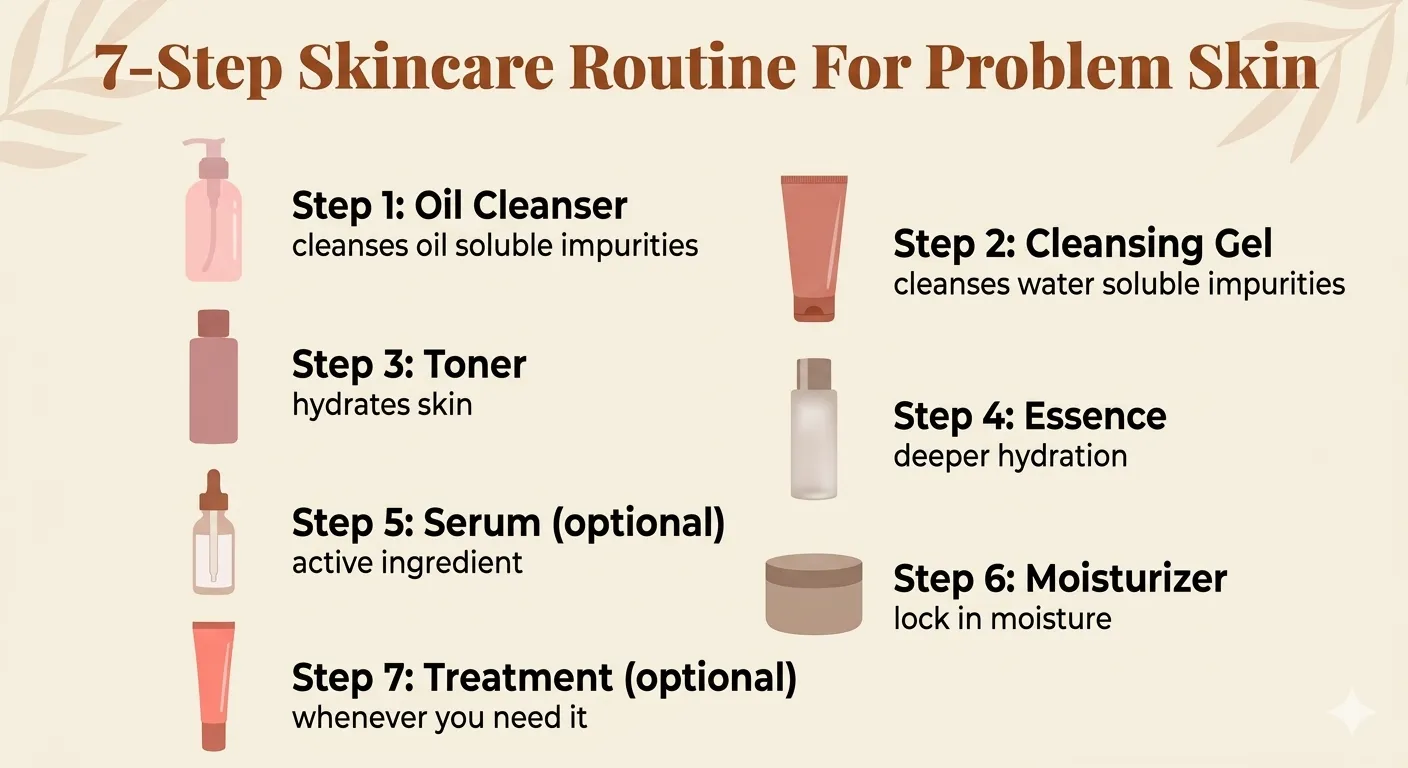
Step-by-Step Acne Skincare Routine
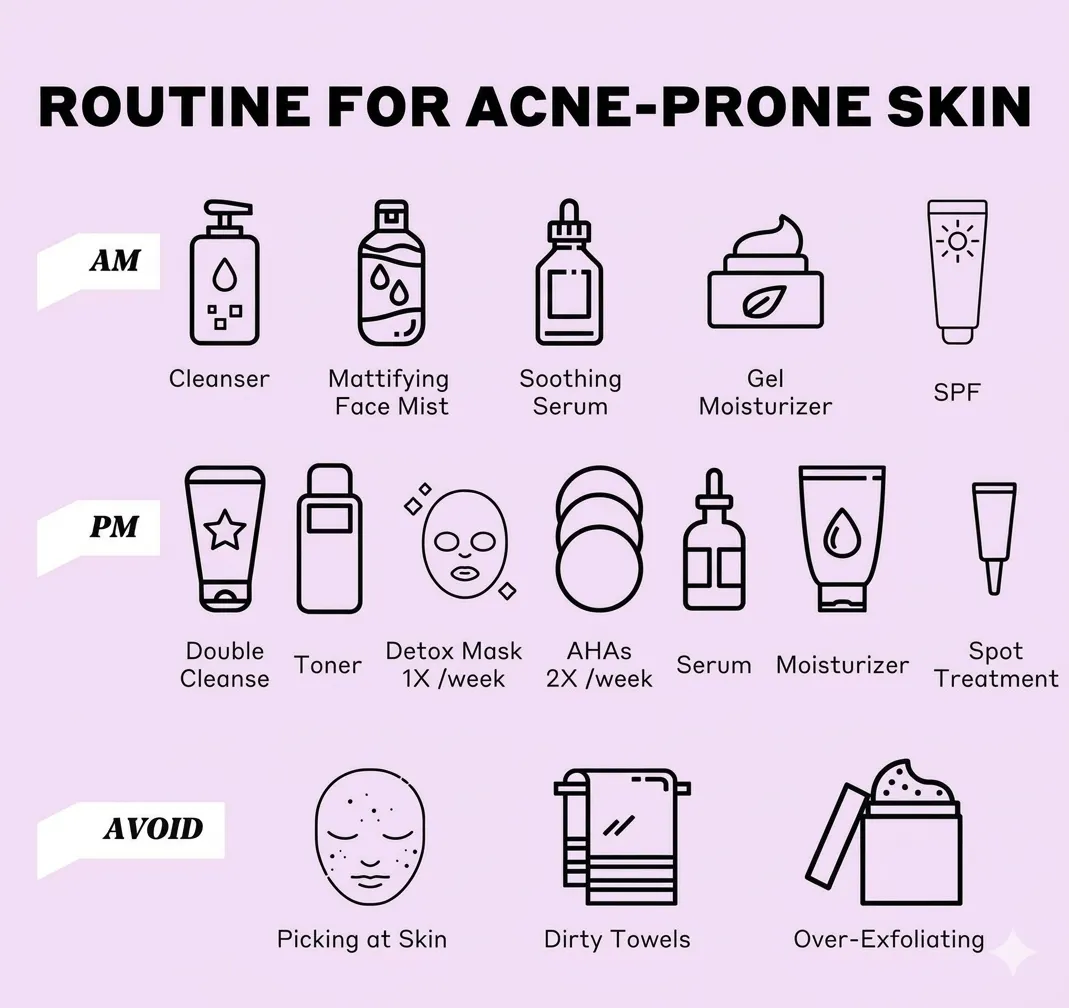
Step 1: Remove Makeup and Sunscreen (Double Cleanse at Night)
The first step in any acne skincare routine is thoroughly removing makeup, sunscreen, and excess oil.
Start with a gentle micellar water or oil cleanser to dissolve impurities without irritating your skin. This helps prevent clogged pores and reduces breakouts.
Why it matters:
- Removes dirt and oil buildup
- Prevents acne-causing bacteria
- Protects your skin barrier
Step 2: Use a Gentle, Acne-Safe Cleanser
Cleansing twice daily is essential for acne-prone skin. Choose a mild, pH-balanced cleanser that is:
- Non-comedogenic
- Fragrance-free
- Gentle on the skin
Avoid harsh cleansers with high concentrations of active ingredients—they can strip your skin and trigger more oil production.
Step 3: Apply Targeted Acne Treatments
Targeted treatments are key to managing breakouts and preventing dark spots.
Best ingredients for acne:
- Salicylic acid (BHA) – unclogs pores
- Benzoyl peroxide – kills acne-causing bacteria
- Retinoids – boost cell turnover
- Mandelic acid – gentle exfoliation
Important tip:
Do not use multiple strong actives at the same time. Alternate them between morning and night or on different days.
Step 4: Exfoliate 2–3 Times per Week
Exfoliation helps remove dead skin cells that can clog pores and cause acne.
Opt for chemical exfoliants instead of physical scrubs, as they are gentler and more effective.
Benefits:
- Prevents blackheads and whiteheads
- Improves skin texture
- Enhances product absorption
Step 5: Use a Weekly Face Mask (Optional)
A deep-cleansing mask can support your acne skincare routine when used correctly.
Use clay or enzyme masks 1–2 times per week to draw out impurities and reduce excess oil.
Avoid:
Using masks with other strong treatments on the same day to prevent irritation.
Step 6: Hydrate with a Non-Comedogenic Moisturizer
Hydration is essential—even for oily, acne-prone skin.
Choose a moisturizer based on your skin type:
- Oily skin: Lightweight gel moisturizer
- Dry or sensitive skin: Cream-based moisturizer
Look for ingredients like:
- Hyaluronic acid
- Ceramides
- Niacinamide
These help repair your skin barrier and reduce inflammation.
Step 7: Apply Sunscreen Every Morning
Sunscreen is a non-negotiable step in any acne skincare routine.
UV exposure can:
- Worsen inflammation
- Slow healing
- Darken acne scars
Choose a broad-spectrum SPF 30 or higher that is:
- Oil-free
- Non-comedogenic
- Lightweight
Extra Step: Spot Treatments for Active Breakouts
Spot treatments can speed up healing for individual pimples.
Popular options include:
- Hydrocolloid patches
- LED light therapy devices
- Targeted acne creams
Use them as a supplement—not a replacement—for your routine.
Common Mistakes in an Acne Skincare Routine
Avoid these mistakes to prevent worsening your acne:
- Using too many active ingredients at once
- Over-exfoliating your skin
- Skipping moisturizer
- Not wearing sunscreen daily
- Switching products too frequently
How to Prevent Acne Dark Spots
Post-acne dark spots (hyperpigmentation) are common but preventable.
Tips to avoid dark spots:
- Always wear sunscreen
- Avoid picking or popping pimples
- Use gentle exfoliation
- Incorporate brightening ingredients like niacinamide or vitamin C
FAQs: Acne Skincare Routine
How long does it take to see results?
Most people see improvements within 4–6 weeks with consistent use.
Can I use multiple acne treatments together?
It’s best to space them out to avoid irritation.
Is moisturizer necessary for acne-prone skin?
Yes. Skipping moisturizer can lead to more oil production and worsen acne.
Conclusion: Build the Right Acne Skincare Routine
A successful acne skincare routine doesn’t need to be complicated. By focusing on gentle care, targeted treatments, and consistency, you can effectively manage breakouts and prevent dark spots.
Start with the basics, listen to your skin, and avoid overloading it with too many products. With patience and the right routine, clear, healthy skin is absolutely achievable.