
10 Daily Positive Habits for Mental Health That Can Transform Your Life
Introduction
In today’s fast-paced and demanding world, taking care of your mental health is just as important as maintaining your physical well-being. While many people focus on exercise, diet, and regular checkups, mental wellness often goes overlooked—yet it plays a crucial role in how we think, feel, and behave every day.
Without a healthy mindset, even the strongest body can feel exhausted, unmotivated, or overwhelmed. Fortunately, awareness around mental health is growing. Conversations about stress, anxiety, burnout, and emotional resilience are becoming more common in workplaces, schools, and everyday life.
The good news? Improving your mental health doesn’t require drastic changes. By adopting small, consistent daily habits, you can build a stronger, more positive mindset over time.
In this article, we’ll explore 10 simple yet powerful daily habits that are backed by science and psychology to help you feel more balanced, focused, and emotionally resilient.
1. Start Your Day with Gratitude
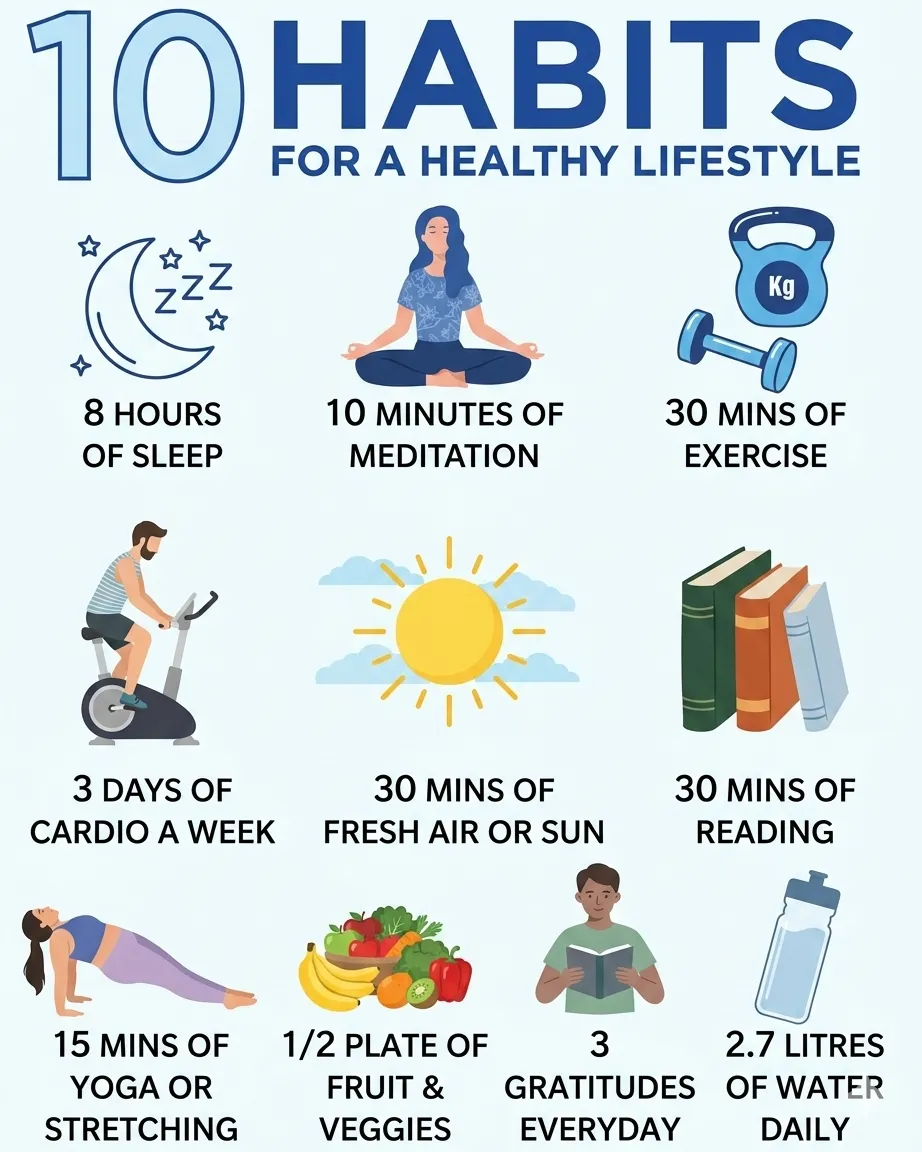
Gratitude is a powerful way to shift your focus from what’s lacking to what’s meaningful in your life. Each morning, take a few minutes to write down three things you’re grateful for, no matter how small.
This simple practice can:
- Boost your mood
- Increase happiness
- Strengthen emotional resilience
Starting your day with gratitude sets a positive tone and helps you approach challenges with a better mindset.
2. Practice Mindful Breathing or Meditation
Spending just 5–10 minutes daily on mindful breathing or meditation can significantly reduce stress and anxiety.
Benefits include:
- Calming your nervous system
- Improving focus and clarity
- Enhancing emotional control
Whether you use guided meditation apps or simply focus on your breath, mindfulness helps you stay present and grounded.
3. Get Moving: Exercise or Stretch Daily
Physical activity is one of the most effective natural mood boosters. Whether it’s:
- Yoga
- Walking
- Home workouts
- Gym sessions
Exercise releases endorphins, which help reduce stress and improve mental clarity. Even light movement can make a noticeable difference in your mood.
4. Eat Mood-Boosting Foods
Your brain needs proper nutrition to function at its best. Include foods such as:
- Fatty fish rich in omega-3
- Leafy greens
- Berries
- Nuts and seeds
These nutrients support brain health, improve mood, and may reduce the risk of depression and fatigue.
5. Stay Hydrated
Dehydration can negatively impact your mood, causing:
- Fatigue
- Headaches
- Irritability
Make it a habit to drink enough water throughout the day. If plain water feels boring, try adding lemon, mint, or fresh fruits for flavor.
6. Limit Social Media Consumption
Spending too much time on social media can lead to:
- Anxiety
- Comparison
- Low self-esteem
Set daily screen time limits and be intentional about your usage. Reducing digital overload helps improve mental clarity and emotional balance.
7. Practice Positive Self-Talk
Your inner dialogue has a powerful influence on your mindset. Replace negative thoughts with positive affirmations such as:
- “I am enough.”
- “I can handle today.”
Positive self-talk helps:
- Build confidence
- Reduce self-doubt
- Strengthen mental resilience
8. Maintain a Consistent Sleep Routine
Sleep plays a vital role in mental health. Poor sleep can affect:
- Mood
- Memory
- Focus
Aim for 7–8 hours of quality sleep each night by:
- Keeping a regular sleep schedule
- Avoiding screens before bedtime
- Creating a relaxing nighttime routine
9. Keep a Daily Journal
Journaling is an effective way to process emotions and clear your mind. Writing regularly can:
- Reduce stress
- Increase self-awareness
- Track personal growth
Try prompts like:
- “What made me smile today?”
- “What challenged me today?”
10. Connect with Loved Ones
Human connection is essential for emotional well-being. Make time to:
- Call a friend
- Meet for coffee
- Chat with family
Strong social connections help reduce loneliness and boost overall happiness.
Conclusion
Improving your mental health doesn’t require major life changes. Instead, it’s the small, consistent habits—like practicing gratitude, exercising, or getting enough sleep—that create lasting transformation.
Think of mental wellness as a daily practice, not a one-time goal.
If you’re feeling overwhelmed, start small. Choose one or two habits that resonate with you and gradually build from there. Over time, these simple actions can lead to greater emotional balance, resilience, and inner peace.