
Skin Cycling Routine for Beginners: The Dermatologist-Approved Way to Use Actives

Using retinol, exfoliating acids, and serums every night might seem like the fastest way to achieve glowing skin—but in reality, it often leads to irritation, redness, and a damaged skin barrier.
That’s where the skin cycling routine comes in—a simple, dermatologist-approved method that helps you get results without overloading your skin.
Developed by Dr. Whitney Bowe, this viral skincare trend is backed by experts and designed to balance active ingredients with essential recovery time.
What Is Skin Cycling?
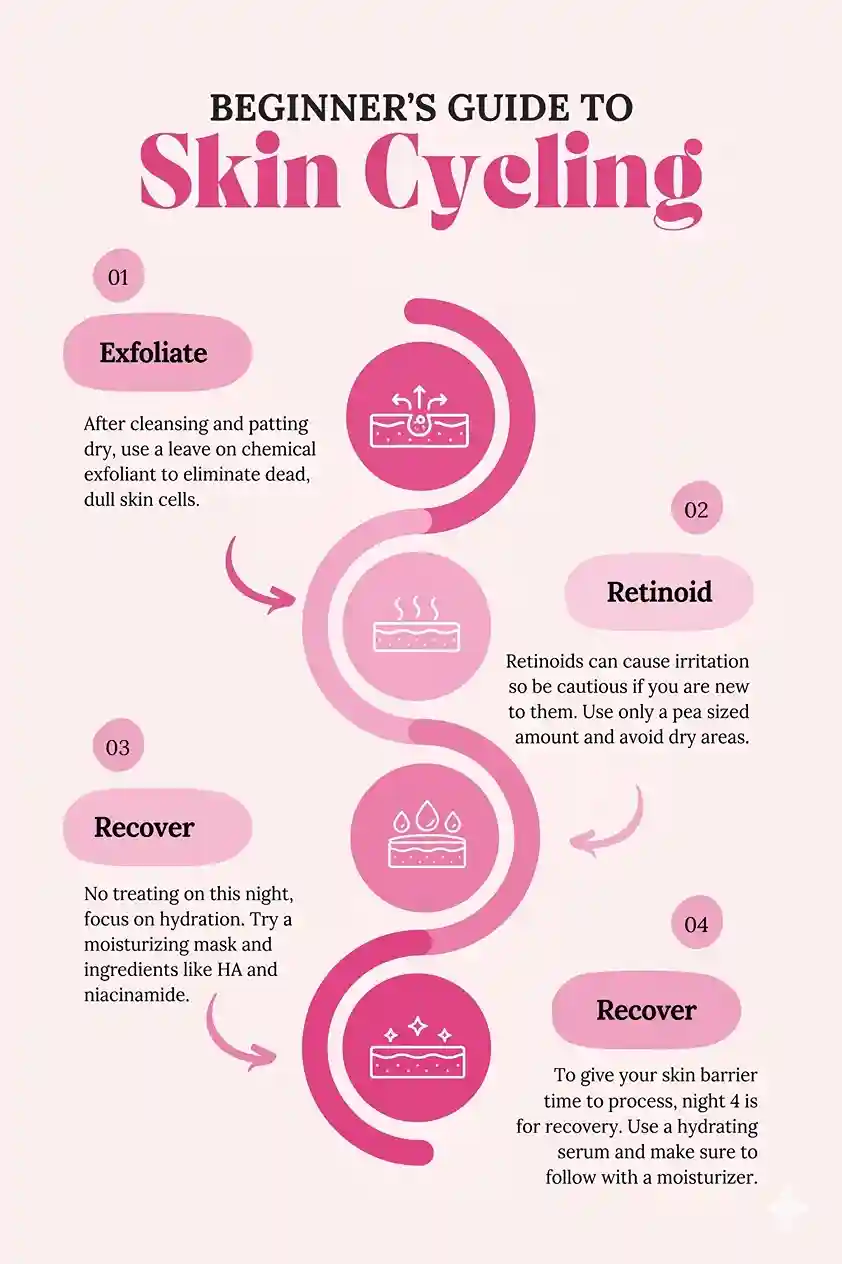
Skin cycling is a structured nighttime skincare routine that follows a repeating four-night cycle:
- Exfoliation
- Retinoid
- Recovery
- Recovery
The goal is simple:
Use powerful active ingredients effectively—without damaging your skin barrier.
Unlike complicated skincare routines, skin cycling doesn’t require more products. Instead, it organizes how and when you use them.
Your morning routine stays the same: cleanser, moisturizer, and sunscreen (SPF).
How the 4-Night Skin Cycling Routine Works
Night 1: Exfoliation
Start with clean skin, then apply a chemical exfoliant such as:
- Glycolic acid
- Lactic acid
- Salicylic acid (great for oily or acne-prone skin)
Avoid physical scrubs, as they can damage your skin barrier.
Finish with a moisturizer—and skip other active ingredients.
Night 2: Retinoid
After exfoliation, your skin is ready to absorb a retinoid more effectively.
Choose based on your needs:
- Retinol → Anti-aging and smoother texture
- Adapalene → Acne treatment
- Tretinoin → Prescription-strength (consult a dermatologist)
Tips:
- Apply after cleansing, then moisturize
- Use the “sandwich method” if you have sensitive skin (moisturizer → retinoid → moisturizer)
- Avoid mixing with AHAs, BHAs, or vitamin C
Nights 3 & 4: Recovery
These are the most important nights—and often the most overlooked.
Focus only on hydration and barrier repair:
- Ceramides
- Hyaluronic acid
- Peptides
No actives. No exfoliation. No retinoids.
These recovery nights allow your skin to rebuild and are the key to why skin cycling works.
Who Should Try Skin Cycling?
The skin cycling routine for beginners is ideal for:
- People new to retinol or exfoliating acids
- Anyone experiencing irritation, peeling, or redness
- Sensitive or combination skin types
- Those who want a simple, effective routine
If you have conditions like rosacea, eczema, or psoriasis, consult a dermatologist before starting.
Essential Products for Skin Cycling
You don’t need a full skincare overhaul. Most routines require just a few basics:
- Gentle cleanser
- Chemical exfoliant (AHA or BHA)
- Retinoid suitable for your skin
- Moisturizer with barrier-repair ingredients
- Broad-spectrum sunscreen (SPF 30+)
Start with low concentrations and increase gradually as your skin builds tolerance.
What Results Can You Expect?
With consistent use, skin cycling delivers noticeable improvements:
Timeline:
- 2–4 weeks: Smoother texture, brighter skin
- 2–3 months: Reduced acne, fine lines, and uneven tone
Dermatologists recommend completing at least 6 full cycles before making adjustments.
Why Skin Cycling Actually Works
Most skincare routines fail because they treat every night as an “active night.”
Skin cycling flips that approach by emphasizing recovery as much as treatment.
This balance helps:
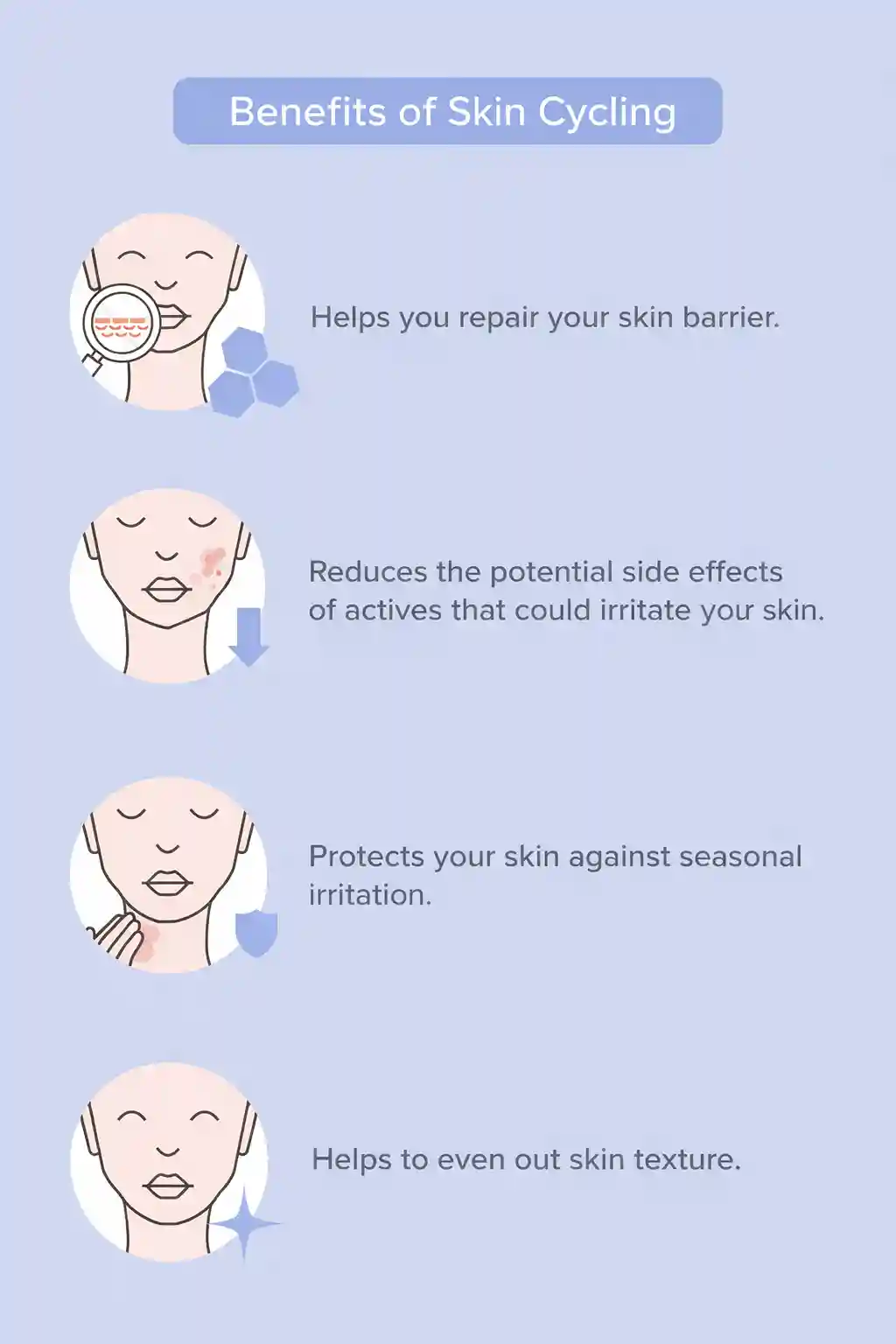
- Prevent irritation
- Strengthen the skin barrier
- Improve effectiveness of active ingredients
Frequently Asked Questions
1. How often should I repeat the cycle?
Continuously. After night 4, restart at exfoliation and repeat the cycle.
2. Is skin cycling suitable for sensitive skin?
Yes. You can modify it:
- Add an extra recovery night (5-day cycle)
- Use gentler acids like lactic acid
- Apply the retinoid sandwich method
3. Does skin cycling replace my morning routine?
No. Morning skincare remains the same:
- Cleanser
- Moisturizer
- SPF (essential when using actives)
4. Can skin cycling help with acne?
Yes.
- Salicylic acid helps unclog pores
- Adapalene targets breakouts
- Recovery nights repair the skin barrier
For severe acne, consult a dermatologist.
Final Thoughts
The skin cycling routine proves that when it comes to skincare, less can be more. By alternating active treatments with recovery nights, you give your skin the time it needs to heal, adapt, and truly glow.
If you’re looking for a beginner-friendly, dermatologist-approved routine that delivers real results—skin cycling might just be your new holy grail