How To Sit With Proper Posture: A Complete Step-by-Step Guide
Sitting is something we do every day—at work, while studying, or even relaxing at home. However, poor sitting habits can lead to discomfort, stiffness, and long-term health issues. Learninghow to sit with proper postureis one of the simplest ways to protect your spine, reduce muscle strain, and improve overall well-being.
In this comprehensive guide, you’ll discover practical, step-by-step instructions to help you achieve and maintain the ideal sitting posture.
What Is Proper Sitting Posture?
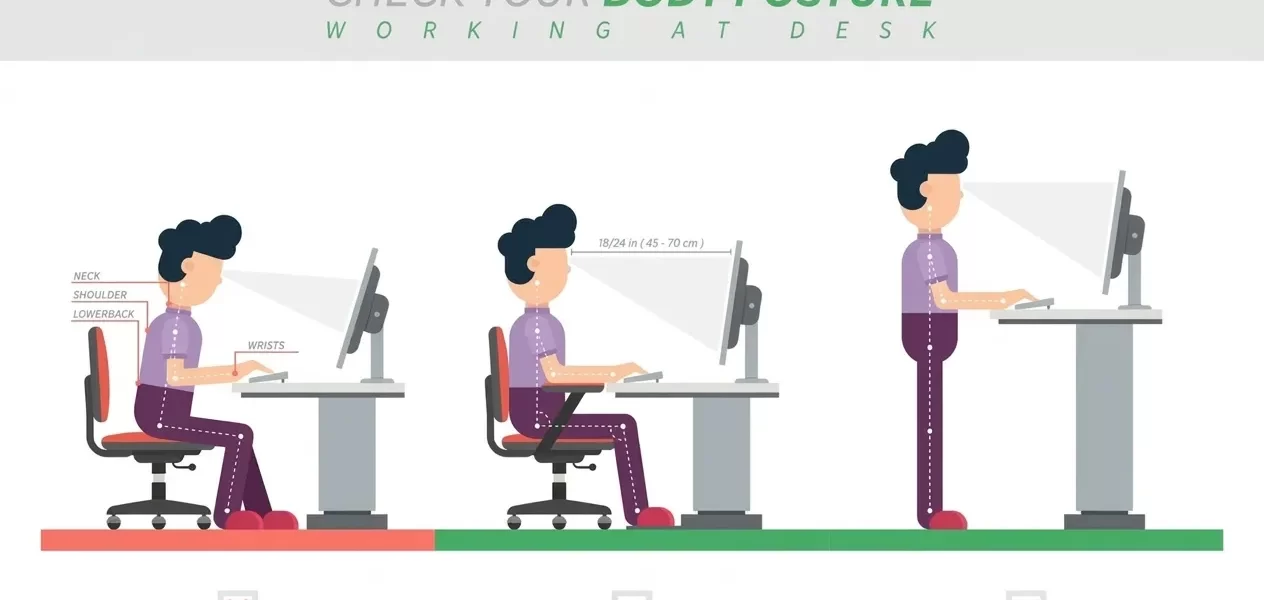
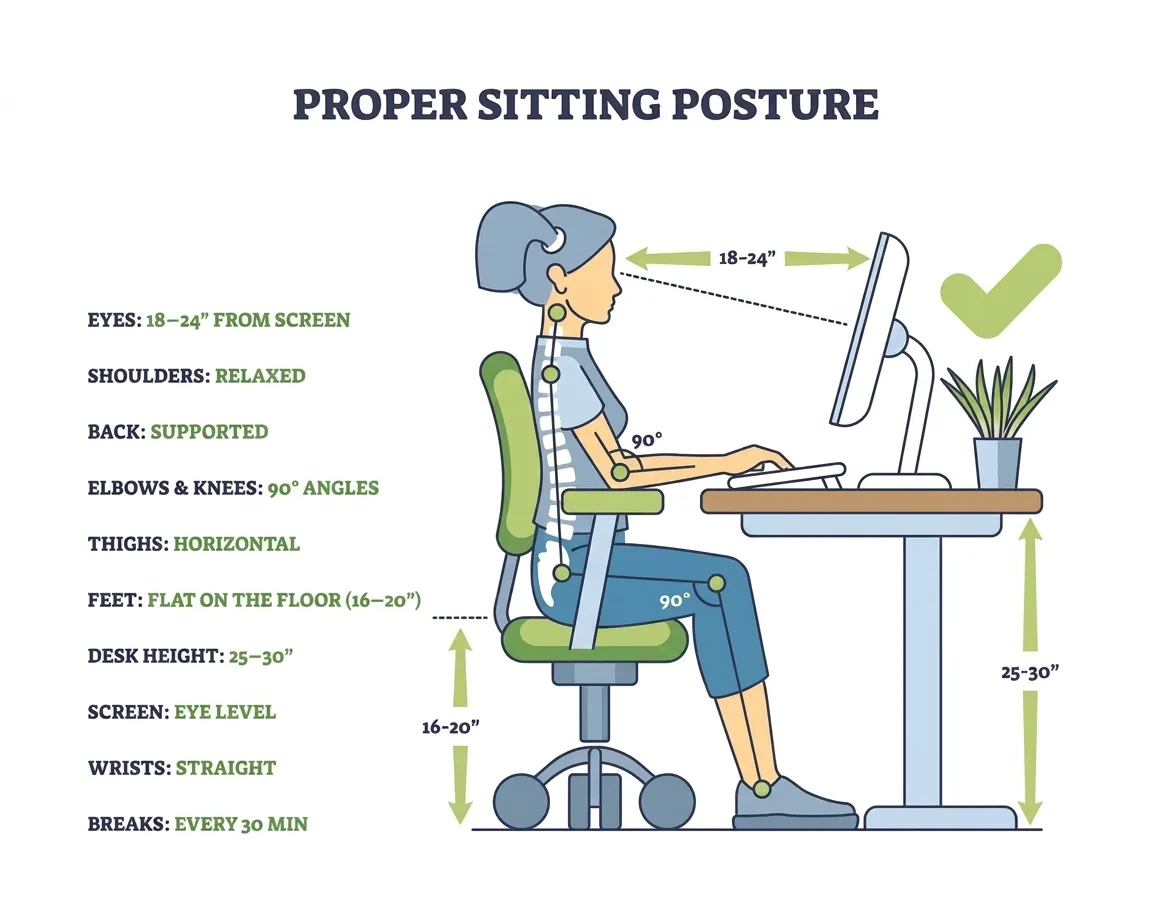
Proper sitting posture means aligning your body in a neutral position where minimal stress is placed on muscles, joints, and ligaments. Ideally, your body should form a straight line from your ears → shoulders → rib cage → pelvis → hips.
This alignment allows your body to function efficiently and reduces unnecessary tension.
Important: Poor posture doesn’t always cause pain immediately. However, if you’re already experiencing discomfort, improving your posture can make a significant difference.
ideal-sitting-posture
Step-by-Step Guide to Proper Sitting Posture
1. Choose the Right Chair
Your chair plays a major role in your posture. A good ergonomic chair should allow adjustments such as:
Seat height
Seat depth
Backrest tilt
Lumbar support
Armrests
The more adjustable your chair is, the easier it will be to support your body properly.
2. Adjust Seat Height
Set your chair so your hips are slightly higher than your knees, creating an angle of about 100–120 degrees. This helps:
Reduce pressure on the hips
Improve pelvic positioning
Encourage a natural posture
3. Position Your Knees Correctly
Keep your knees bent at roughly 100 degrees
Ensure both knees are level and aligned
Avoid letting one knee sit further forward than the other
4. Place Your Feet Properly
Keep both feet flat on the floor
Position them about hip-width apart
Use a footrest if needed
Avoid crossing your legs
5. Align Your Pelvis
Your pelvis is the foundation of good posture. Slightly tilt it forward so your weight rests evenly on your sitting bones.
This position helps your spine naturally align and reduces lower back strain.
6. Distribute Your Weight Evenly
Avoid leaning to one side. Instead:
Balance your weight equally on both hips
Keep your torso centered
7. Maintain a Neutral Lower Back
Keep a natural curve in your lower back:
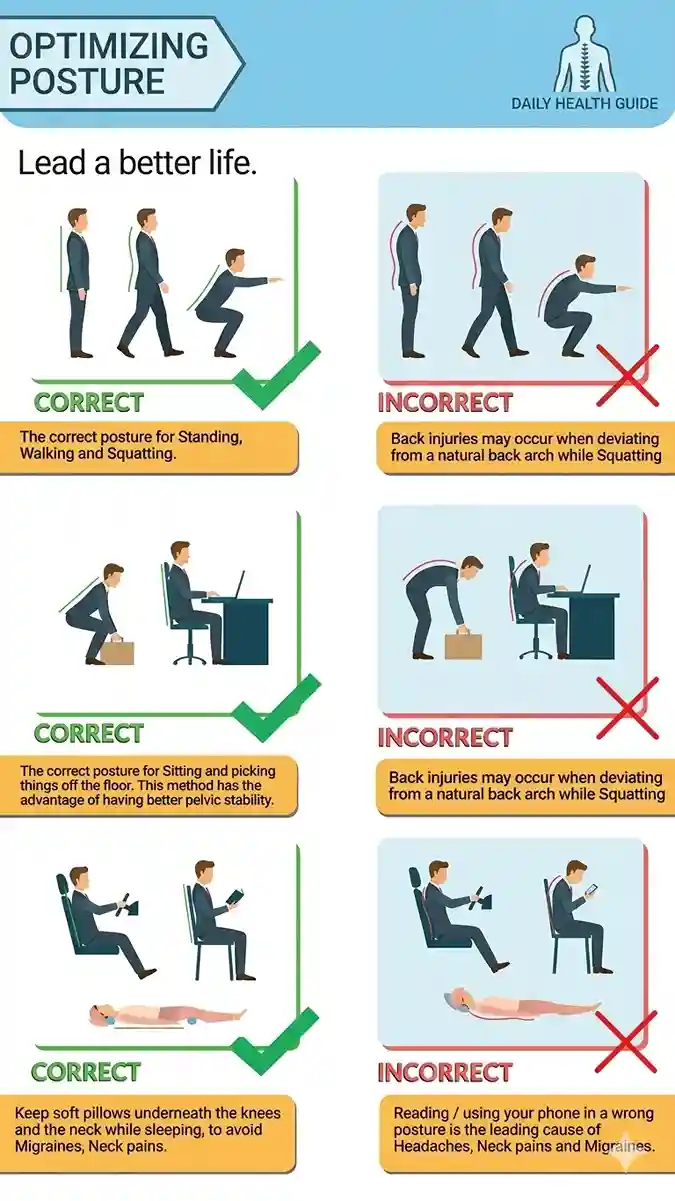
Avoid slouching
Avoid over-arching
Engage your core gently
8. Position Your Rib Cage
Your rib cage should sit directly above your pelvis:
Don’t let your ribs flare outward
Keep your torso upright and stable
Think of your chest being gently lifted
9. Keep Your Upper Back Upright
Maintain a straight upper back by:
Slightly lifting your chest (sternum)
Avoiding a rounded or hunched position
10. Lengthen Your Neck
Keep your neck tall and relaxed:
Imagine your head gently lifting upward
Avoid compressing your neck
11. Adjust Your Chin Position
Slightly tuck your chin inward
Avoid pushing your head forward
This helps prevent forward head posture, a common issue with prolonged sitting.
12. (Optional) Tongue Position
Some people find that placing the tongue gently on the roof of the mouth (a technique known as “mewing”) helps maintain head and neck alignment. While evidence is limited, it may be worth trying.
13. Reset Your Shoulders
Follow these steps:
Stretch your arms outward to widen your shoulders
Gently pull your shoulder blades back
Slightly rotate your arms backward
Relax your arms while maintaining this position
Avoid over-tensing—keep it natural and relaxed.
natural-and-relaxed
14. Position Your Arms
If working at a desk:
Keep elbows close to your body
Avoid reaching forward
Bring your keyboard and mouse closer
15. Be Aware of the Feeling
Proper posture should feel:
Upright but relaxed
Stable without excessive tension
If it feels forced, you’re likely overcorrecting.
16. Breathe Naturally
Good posture supports better breathing:
Let your rib cage expand freely
Avoid tension in your shoulders and neck
Breathe deeply and calmly
17. Address Physical Limitations
If maintaining good posture feels difficult, it may be due to:
Muscle weakness
Joint stiffness
Poor mobility
Targeted exercises can help improve these limitations over time.
18. Don’t Aim for Perfection
Perfect posture doesn’t exist. Instead:
Focus on gradual improvement
Practice consistency
Start with small time intervals (e.g., 5 minutes per hour)
19. Take Regular Breaks
Even with perfect posture, sitting too long is not healthy. Make sure to:
Stand up regularly
Stretch your body
Move throughout the day
Why Proper Sitting Posture Matters
Improving your posture can:
Reduce back and neck pain
Improve breathing and circulation
Enhance focus and productivity
Prevent long-term musculoskeletal issues
Final Thoughts
Learning how to sit with proper posture is a powerful habit that can transform your daily comfort and long-term health. By following these simple steps and making small adjustments, you can significantly reduce strain on your body.
Remember: progress is more important than perfection. Start small, stay consistent, and your posture will improve over time.