

The Most Effective Strategies for Achieving Long-Term Weight Loss
Losing weight is one thing—keeping it off long-term is the real challenge. Research shows that more than 80% of people regain lost weight within five years. However, that doesn’t mean long-term success is impossible.
In fact, about 20% of individuals successfully lose at least 10% of their body weight and maintain it for over a year. The key difference? They focus on sustainable lifestyle changes instead of quick fixes.
In this guide, you’ll discover the science behind weight regain, common barriers, and the most effective strategies for achieving lasting results.
Is Long-Term Weight Loss Really Possible?
Yes—long-term weight loss is absolutely achievable.
The problem isn’t lack of willpower. It’s that many people rely on extreme diets that are impossible to maintain. Once those habits stop, the weight often comes back.
Sustainable weight loss comes from:
- Consistent habits
- Balanced nutrition
- Regular physical activity
- A long-term mindset
Instead of chasing rapid results, focus on building a lifestyle you can maintain for years.
Why Long-Term Weight Loss Is So Difficult
1. Biological Barriers
Your body is designed to protect your weight, making long-term fat loss challenging.
Metabolic Slowdown
When you lose weight, your metabolism slows down to conserve energy. This means you burn fewer calories than before—even at the same weight.
Increased Hunger
Weight loss triggers hormonal changes that increase appetite. For every kilogram lost, your body may push you to eat more—making maintenance harder.
2. Psychological Barriers
Your mindset plays a huge role in your success.
Stress
Chronic stress increases cortisol levels, which can:
- Trigger emotional eating
- Increase cravings
- Promote fat storage (especially around the belly)
Depression
Low motivation and energy levels can make it harder to stay active and maintain healthy habits.
Anxiety
Anxiety can lead to binge eating or inconsistent eating patterns, both of which disrupt progress.
The Most Effective Strategies for Long-Term Weight Loss
To succeed long-term, you need a strategy that works with your body—not against it.
1. Take an Individualized Approach
There is no one-size-fits-all diet.
Factors like genetics, metabolism, and lifestyle all influence what works best for you. For example:
- Some people thrive on lower-carb diets
- Others perform better with balanced macronutrients
Tip: Work with a professional or experiment mindfully to find your ideal approach.
2. Make Gradual Dietary Changes
Extreme diets often fail because they’re unsustainable.
Instead:
- Reduce sugar slowly
- Replace processed foods with whole foods
- Adjust portion sizes over time
Small changes are easier to maintain—and lead to lasting results.
3. Focus on Food Quality
What you eat matters just as much as how much you eat.
Prioritize:
- Whole, unprocessed foods
- Lean proteins (chicken, fish, tofu)
- Vegetables and fruits
- Whole grains
Limit:
- Added sugars
- Refined carbohydrates
- Processed snacks
Simple swap: Replace packaged snacks with fruits or nuts.
4. Build Healthy Behaviors
Weight loss isn’t just about food—it’s about habits.
Key behavioral strategies include:
- Identifying emotional eating triggers
- Practicing mindful eating
- Setting realistic goals
Stress management techniques like meditation or deep breathing can also help prevent overeating.
5. Stay Physically Active
Exercise is essential for maintaining weight loss and improving overall health.
Benefits include:
- Burning calories
- Preserving muscle mass
- Boosting metabolism
- Improving mood
Recommendation: Aim for 75–150 minutes of exercise per week. Choose activities you enjoy—like walking, swimming, or dancing—to stay consistent.
6. Educate Yourself and Seek Support
Knowledge is power when it comes to weight loss.
Learn how to:
- Read nutrition labels
- Plan balanced meals
- Control portion sizes
Support systems—such as coaches, friends, or online communities—can help keep you accountable and motivated.
7. Avoid Processed Foods
Highly processed foods are often high in calories and low in nutrients.
They can:
- Increase cravings
- Disrupt hunger signals
- Slow progress
Better choice: Opt for homemade meals using fresh, whole ingredients.
8. Think Long-Term, Not Temporary
Stop thinking in terms of “dieting.”
Instead, adopt a lifestyle mindset:
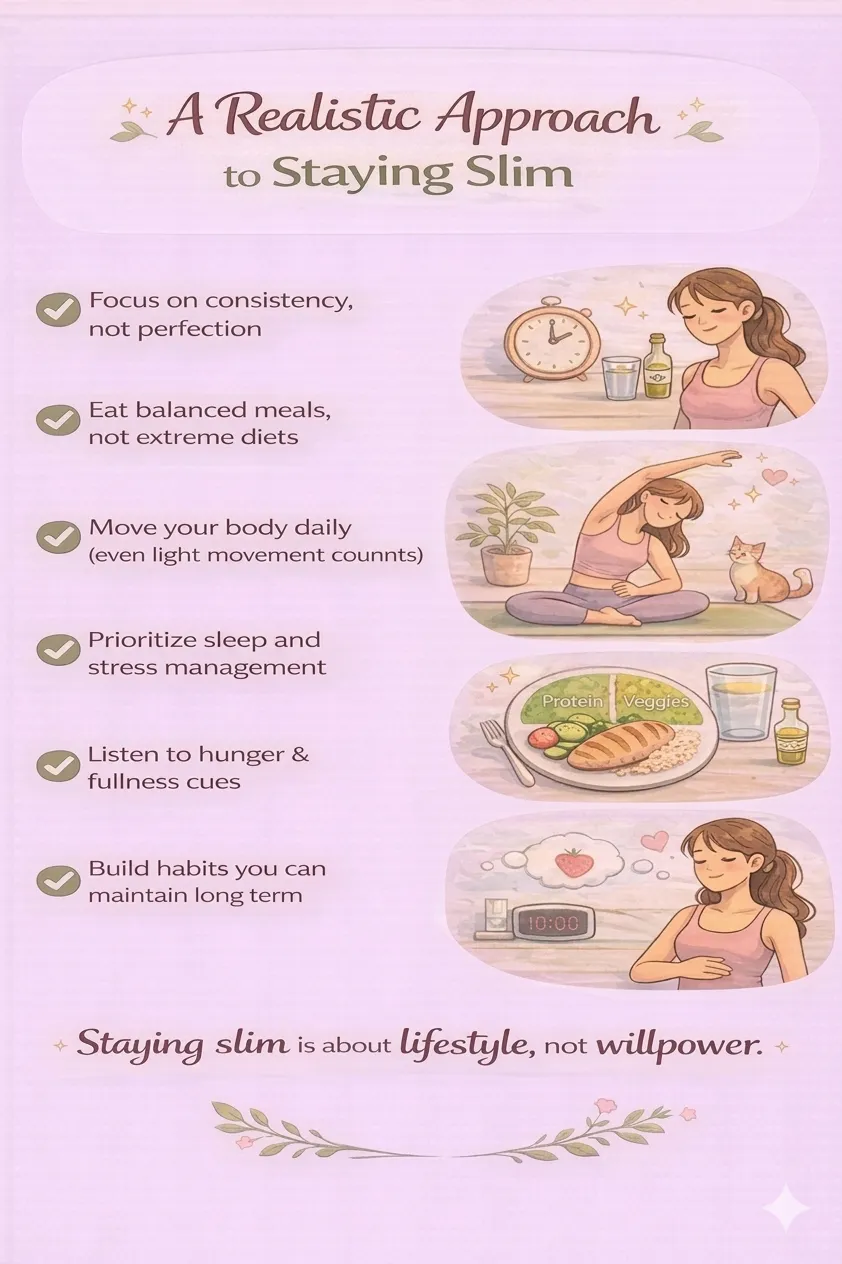
- Build habits you can maintain for life
- Accept slow progress
- Focus on consistency over perfection
This shift is what separates short-term success from long-term transformation.
How Fast Should You Lose Weight?
Healthy weight loss is gradual.
A safe and sustainable rate is 1.5 to 2.5 kg per month
Losing weight too quickly can:
- Strain your body
- Cause muscle loss
- Increase the risk of regaining weight
Slow and steady truly wins the race.
Final Thoughts
Long-term weight loss isn’t about extreme discipline—it’s about smart, sustainable choices.
To succeed, focus on:
- Consistency over intensity
- Quality nutrition over restriction
- Lifestyle changes over temporary diets
Remember:
The goal isn’t just to lose weight—it’s to keep it off for life.