
Keep Your Eyes Healthy: Simple Habits to Protect Your Vision for Life
Your eyes are one of the most important organs in your body, yet they’re often overlooked—until problems arise. The good news is that maintaining healthy vision doesn’t require complicated routines. With a few smart habits and regular checkups, you can protect your eyesight for years to come.
In this guide, you’ll discover practical tips to keep your eyes healthy and reduce the risk of vision problems.
Why Eye Health Matters
Many serious eye conditions develop without noticeable symptoms in the early stages. Diseases like glaucoma, diabetic retinopathy, and macular degeneration can silently damage your vision before you even realize it.
That’s why prevention and early detection are essential.
1. Get Regular Dilated Eye Exams
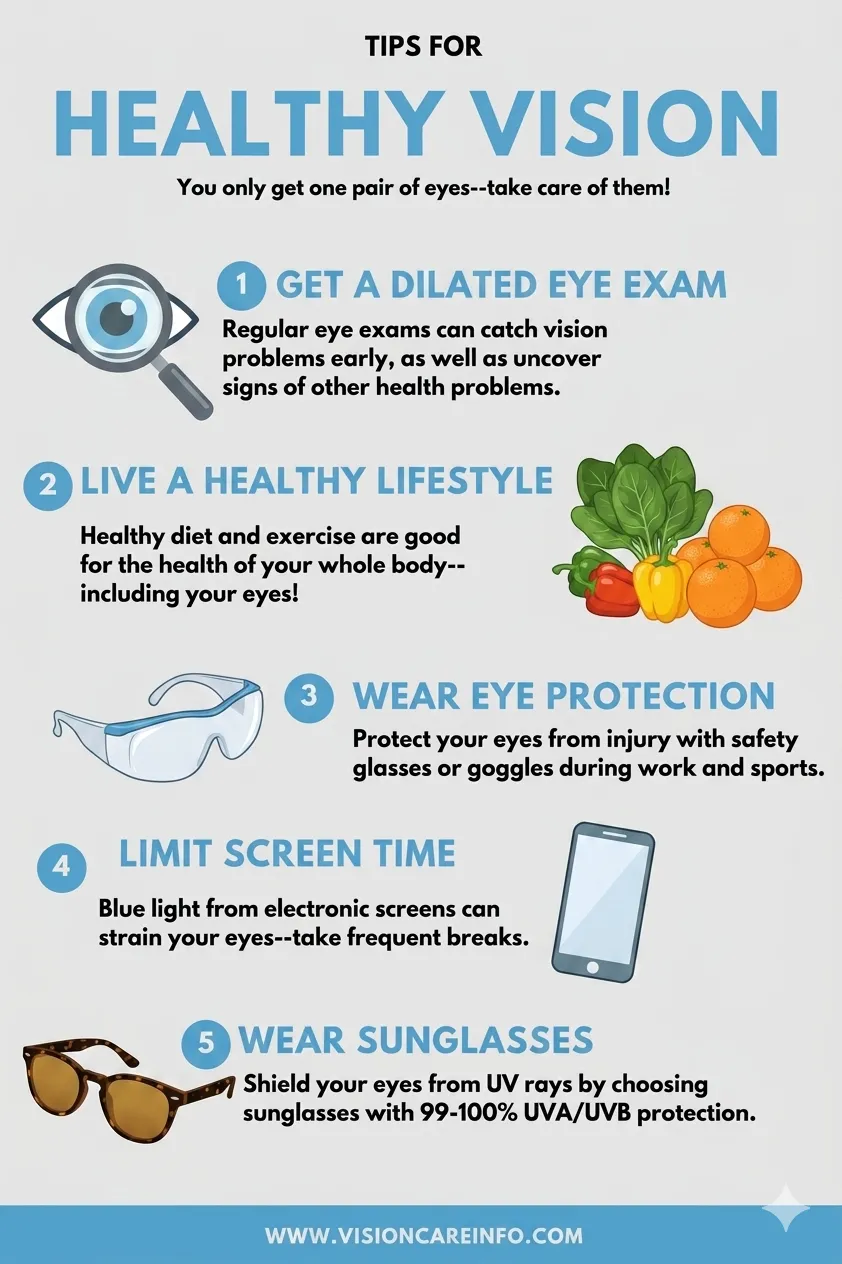
A comprehensive dilated eye exam is one of the most effective ways to detect eye problems early.
- It’s quick, safe, and painless
- Helps identify diseases before symptoms appear
- Allows for early treatment and better outcomes
Even if your vision seems fine, regular eye exams should be part of your healthcare routine.
2. Understand Your Risk Factors
Some people are more likely to develop eye diseases. You may be at higher risk if you:
- Are over the age of 40
- Are overweight or obese
- Have a family history of eye disease
- Have chronic conditions like diabetes or high blood pressure
For example, people with diabetes are at risk of diabetic retinopathy, a condition that can lead to blindness if left untreated.
Tip: Talk to your doctor about your personal risk and how to reduce it.
3. Know Your Family Eye Health History
Many eye conditions are hereditary, including:
- Glaucoma
- Age-related macular degeneration
Ask your family members about their eye health and share this information with your eye doctor. Early awareness can help you take preventive action.
4. Maintain a Healthy Lifestyle
Your overall health directly affects your vision. Adopting healthy habits can significantly reduce your risk of eye disease.
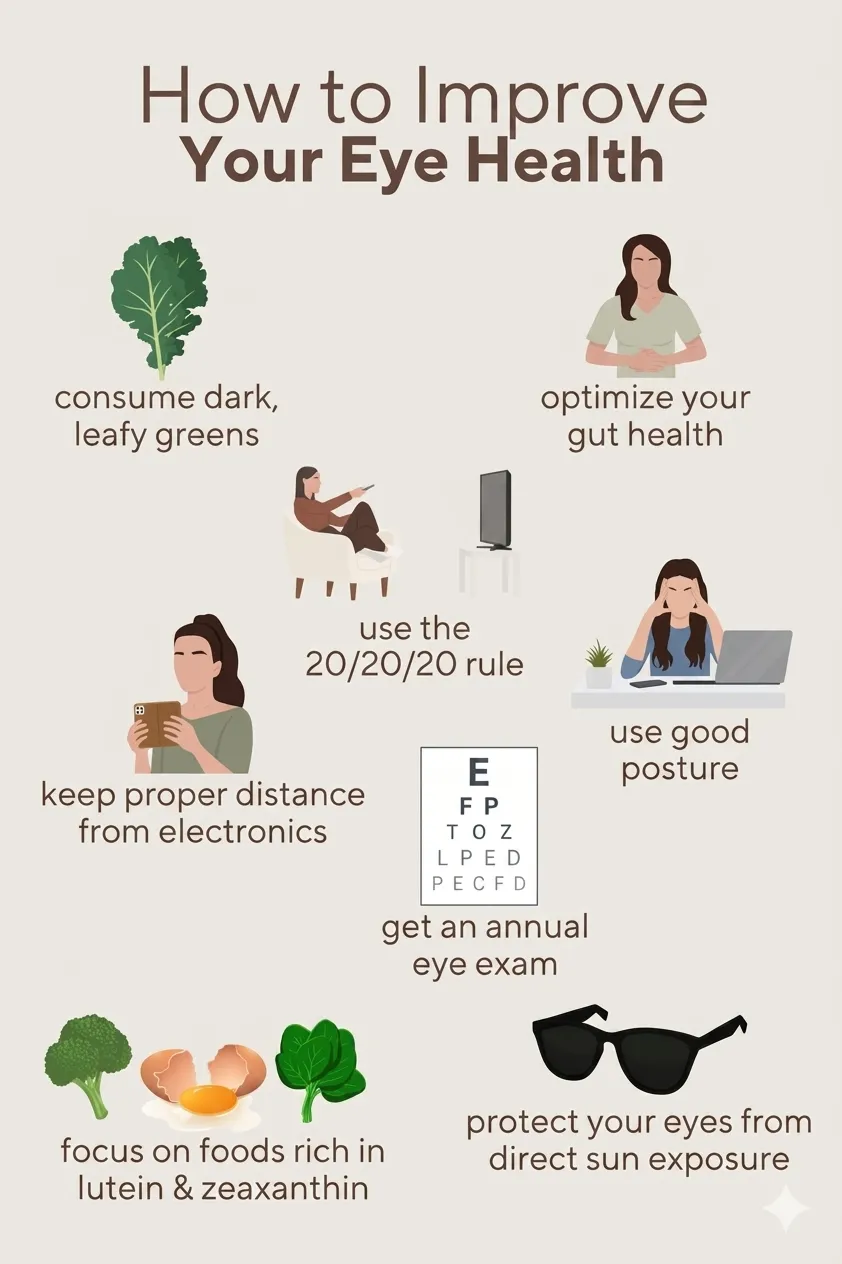
Eat Eye-Friendly Foods
Include nutrient-rich foods such as:
- Dark leafy greens (spinach, kale)
- Omega-3 rich fish (salmon, tuna)
- Fruits and vegetables high in vitamins A, C, and E
Stay Physically Active
Regular exercise helps:
- Improve blood circulation
- Reduce the risk of diabetes and hypertension
- Support overall eye health
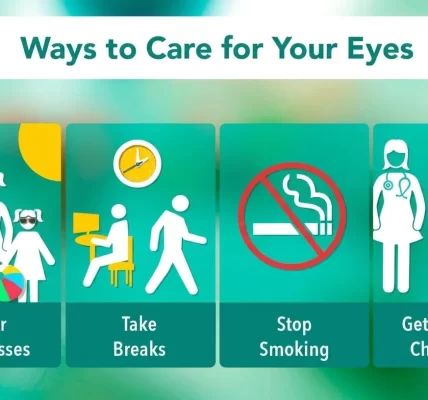
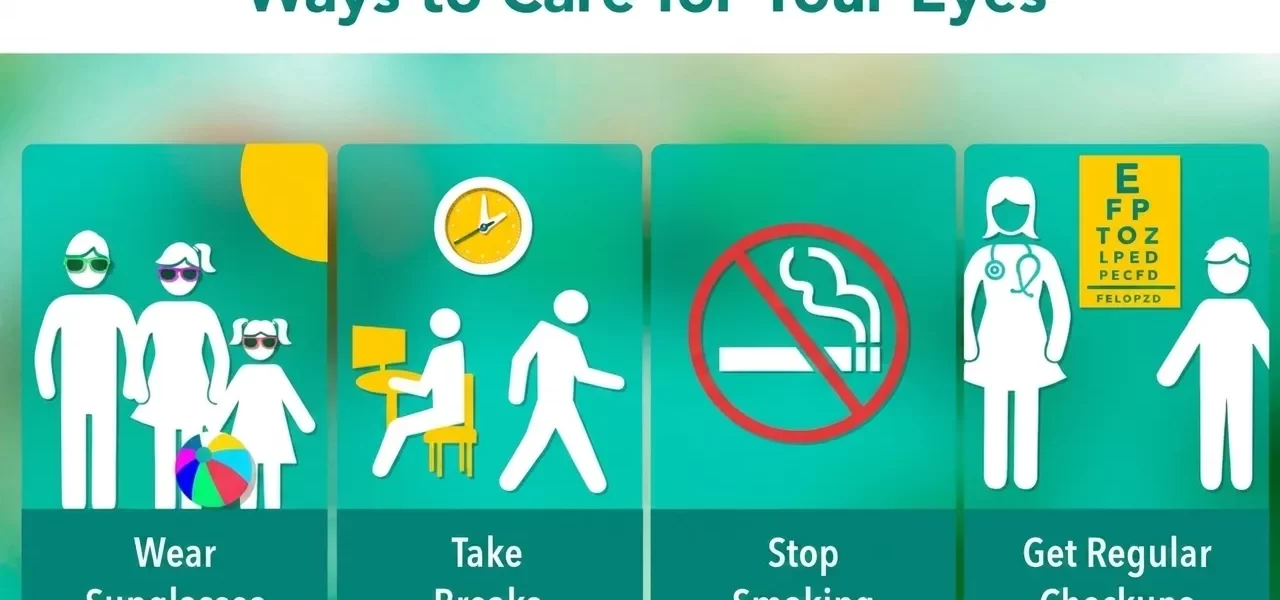
Quit Smoking
Smoking increases the risk of:
- Cataracts
- Macular degeneration
- Optic nerve damage
Quitting smoking is one of the best decisions you can make for both your eyes and overall health.
5. Protect Your Eyes Every Day
Simple daily habits can go a long way in preserving your vision.
Wear Sunglasses
Choose sunglasses that block 99–100% of UVA and UVB rays to protect your eyes from harmful sunlight—even on cloudy days.
Use Protective Eyewear
Wear safety glasses or goggles when:
- Playing sports
- Working with tools or chemicals
- Doing home repairs
Follow the 20-20-20 Rule
If you spend long hours on screens:
- Every 20 minutes
- Look at something 20 feet away
- For at least 20 seconds
This helps reduce eye strain and fatigue.
6. Practice Proper Contact Lens Care
If you wear contact lenses:
- Always wash your hands before handling them
- Clean and disinfect lenses regularly
- Replace lenses as recommended
Proper hygiene can prevent infections and protect your eyes from serious complications.
Healthy Eyes for a Better Future
While some vision changes are a natural part of aging, many eye diseases are preventable. By combining regular checkups with healthy daily habits, you can maintain clear vision and protect your eyes long-term.
Final Thoughts
Taking care of your eyes doesn’t have to be complicated. Start with small, consistent actions—schedule regular eye exams, eat nutritious foods, and protect your eyes from daily risks.
Your future vision depends on what you do today.