
Guide to Building an Effective Workout Schedule
Starting a fitness journey can feel confusing and overwhelming. With so much conflicting advice online, it’s hard to know what actually works. The truth is, building an effective workout schedule doesn’t require guesswork—it requires a clear, science-based approach.
This guide will walk you through how to create a workout plan that matches your goals, whether you want to lose fat, build muscle, or simply improve your overall health.
Why Is It Important to Have a Structured Workout Plan?
A well-designed workout schedule is the key to achieving real results. Without a plan, you may waste time on ineffective exercises, risk injury, or lose motivation due to lack of progress.
An effective workout plan helps you:
- Stay consistent and focused
- Train efficiently toward specific goals
- Avoid overtraining or muscle imbalances
- Track measurable progress over time
For example:
- If your goal is muscle gain, your plan should prioritize resistance training.
- If your goal is fat loss, you need a mix of strength training and cardio.
Having a structured routine removes uncertainty and builds long-term habits—especially important for beginners.
How to Create a Workout Plan Based on Your Goals
The most effective workout plans are built using a method called concurrent training, which combines:
- Resistance Training (strength workouts)
- Aerobic Training (cardio exercises)
This approach allows you to:
- Burn fat efficiently
- Build and maintain muscle
- Improve overall fitness
The balance between strength and cardio will depend on your primary goal:
For Fat Loss
- Focus on creating a calorie deficit
- Combine weight training with cardio
- Preserve muscle while burning fat
For Muscle Gain
- Prioritize progressive strength training
- Use cardio moderately to support recovery
- Focus on increasing strength and volume over time
For General Fitness
- Balance strength, cardio, and mobility
- Maintain overall health and endurance
7 Steps to Building an Effective Workout Schedule
1. Define Your Fitness Goal
Be specific. Instead of saying “get fit,” set a measurable goal like:
- Lose 10 pounds in 12 weeks
- Gain 5 pounds of muscle
- Run 5K without stopping
Clear goals guide your entire workout plan.
2. Choose Your Weekly Training Frequency
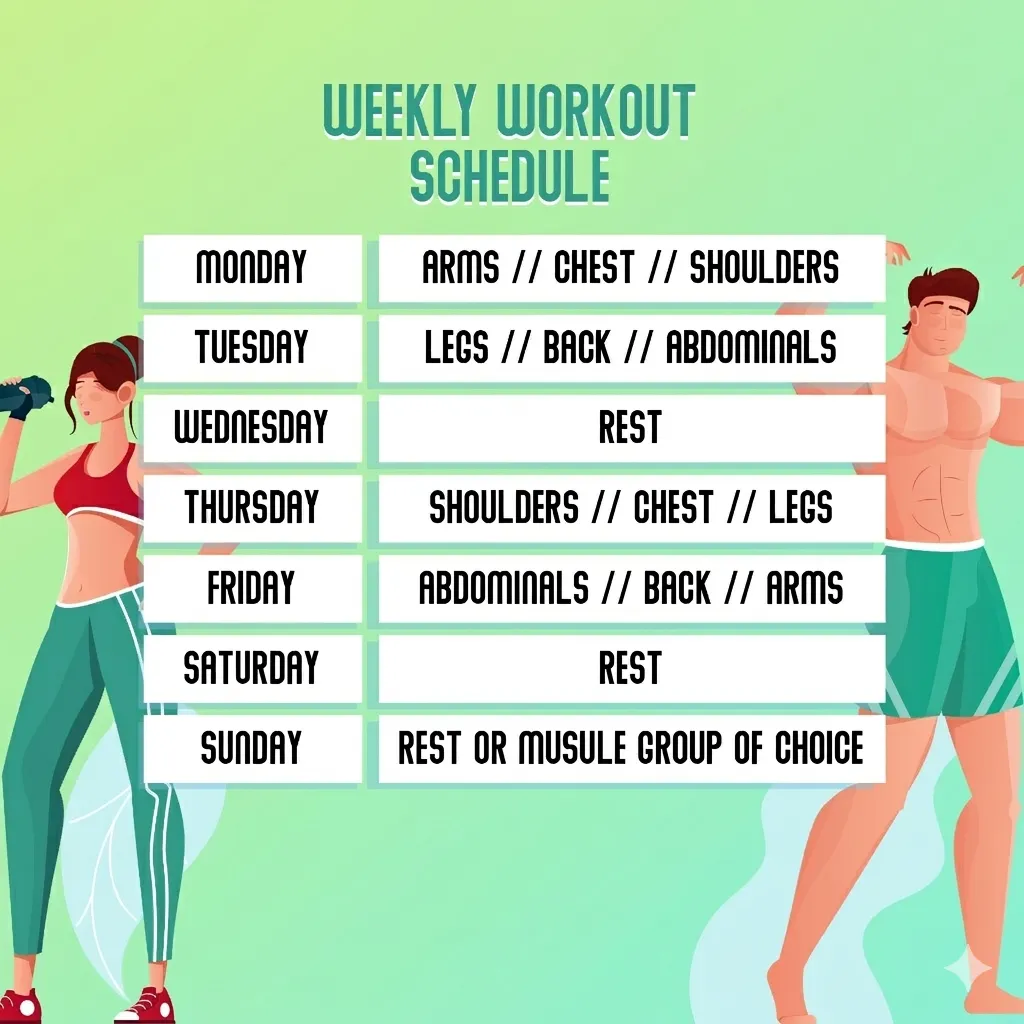
Decide how many days you can realistically train.
- Beginners: 3 days per week
- Intermediate: 4–5 days per week
Consistency matters more than intensity.
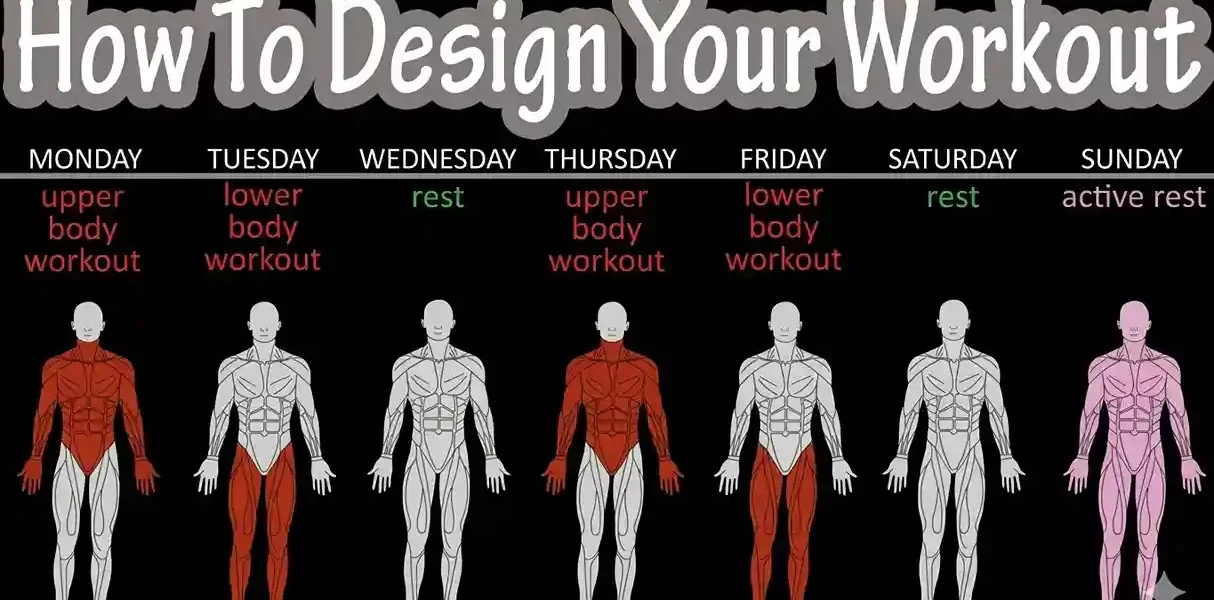
3. Select a Training Split
A training split determines how you organize workouts:
- Full Body (3 days/week): Great for beginners
- Upper/Lower (4 days/week): Balanced and effective
- Push/Pull/Legs (3–5 days/week): Ideal for muscle growth
4. Pick the Right Exercises
Focus on compound exercises:
- Squats
- Deadlifts
- Bench press
- Pull-ups
Add isolation exercises to target specific muscles:
- Bicep curls
- Tricep extensions
- Leg curls
For home workouts, use dumbbells, resistance bands, or bodyweight movements.
5. Set Reps, Sets, and Rest Time
Adjust based on your goal:
- Strength: 3–6 reps, heavy weight, long rest
- Muscle Growth: 6–12 reps, moderate weight
- Endurance: 15+ reps, lighter weight
Train close to your limit, but maintain proper form.
6. Add Cardio Training
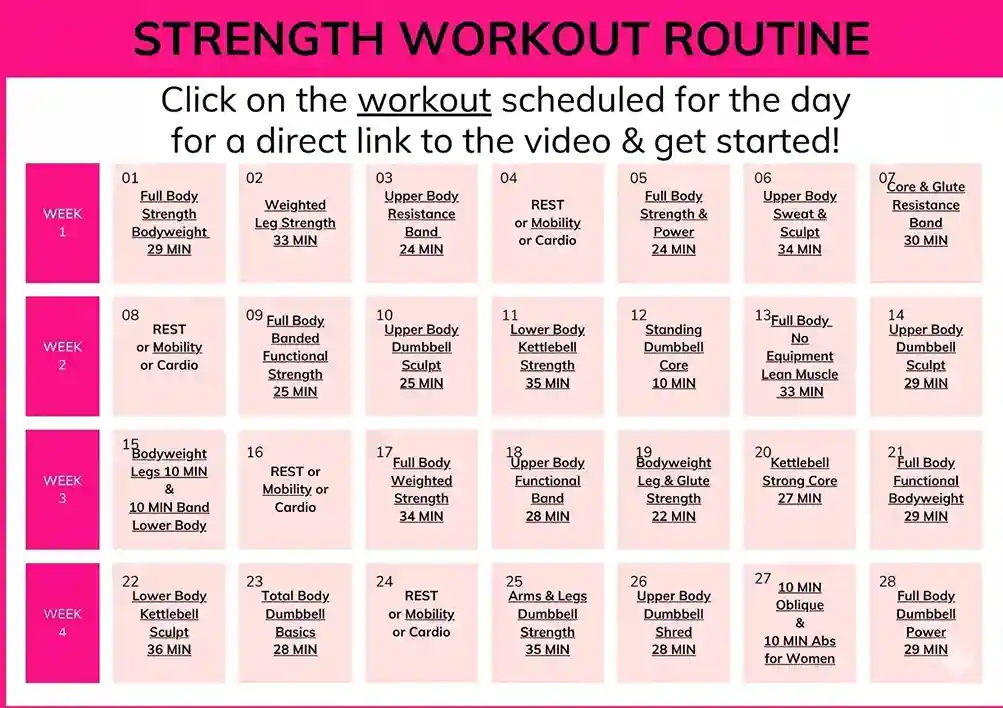
Include 2–3 cardio sessions per week:
- Moderate Cardio: 30–45 minutes steady pace
- HIIT: Short bursts of intense effort
Tip: Do strength training before cardio if done on the same day.
7. Plan for Progress and Recovery
To see continuous results:
- Increase weights or reps gradually (progressive overload)
- Get 7–9 hours of sleep
- Take 1–2 rest days per week
Every 4–8 weeks, include a lighter “deload” week to avoid burnout.
How Many Days a Week Should You Work Out?
The ideal workout frequency depends on your experience and goals:
- 3 days/week: Best for beginners
- 4 days/week: Balanced progress
- 5 days/week: Advanced training
For muscle growth, aim for 10–20 sets per muscle group per week.
How Long Does It Take to See Results?
Results vary, but here’s a realistic timeline:
0–8 Weeks
- Improved strength and coordination
- Minimal visual changes
3–6 Months
- Visible muscle growth
- Noticeable fat loss
- Better endurance
6+ Months
- Significant body transformation
- Strong habits and consistency
You can see major progress in 3 months, but lasting transformation takes time and discipline.
Best Tools to Build a Workout Plan
Fitness apps can help you stay on track by providing:
- Custom workout plans
- Progress tracking
- Exercise demonstrations
They’re especially helpful for beginners or people training at home.
Frequently Asked Questions
What Muscles Are Easiest to Tone?
Quadriceps, glutes, shoulders, and biceps tend to respond quickly to training.
Can You Transform Your Body in 3 Months?
Yes, you can achieve visible results, but full transformation usually takes 6–12 months.
What Workout Burns the Most Fat?
A combination of:
- Strength training
- Cardio (especially HIIT)
This creates the most effective calorie deficit.
Is It Bad to Work Out on an Empty Stomach?
Not necessarily. Light cardio is fine, but intense workouts may require fuel for better performance.
Final Thoughts
Building an effective workout schedule isn’t about finding shortcuts—it’s about consistency and smart planning.
By combining strength training, cardio, and proper recovery, you create a balanced system that delivers long-term results.
Start simple, stay consistent, and gradually improve. Over time, you’ll build not just a better body—but a healthier, stronger lifestyle.