

The Importance of Self-Care and How To Practice It
Introduction
In today’s fast-paced world, it’s easy to neglect your own needs while juggling work, relationships, and daily responsibilities. However, self-care is not a luxury—it’s a necessity for maintaining both mental and physical well-being.
Self-care refers to the intentional actions you take to care for your emotional, psychological, physical, and social health. The key thing to remember is that self-care looks different for everyone. What works for one person may not work for another, so it’s important to build a routine tailored to your individual needs.
In this article, we’ll explore why self-care matters, its benefits, and practical ways to incorporate it into your daily life.
Why Is Self-Care Important?
Self-care plays a crucial role in helping you:
- Maintain overall health
- Prevent illness
- Cope with stress and life challenges
Your mental and physical health are deeply connected. When you take care of your emotional well-being, your physical health often improves—and vice versa.
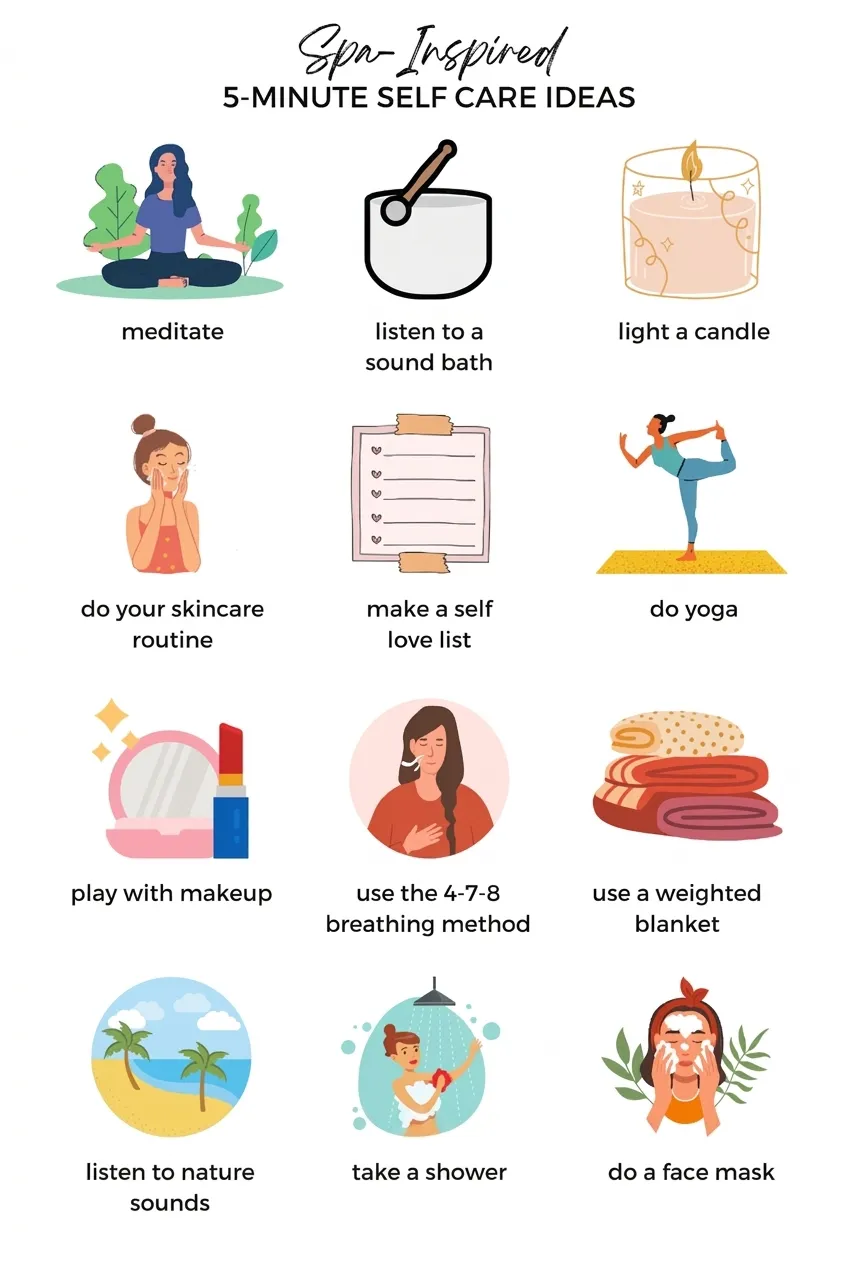
Key Benefits of Self-Care
Adopting a consistent self-care routine can lead to:
- Reduced symptoms of anxiety and depression
- Lower risk of illness
- Improved mood and energy levels
- Better stress management
- Prevention of burnout
- Stronger relationships and social connections
- Faster recovery from illness or medical procedures
Research also shows that healthy habits like regular exercise can significantly increase life expectancy, making self-care a long-term investment in your future.
How To Practice Self-Care
Self-care includes a wide range of habits and lifestyle choices. The goal is to find activities that support your well-being and fit naturally into your daily routine.
1. Get Regular Physical Activity
Exercise is one of the most effective ways to boost both mental and physical health. It helps:
- Reduce symptoms of depression
- Lower stress hormones
- Improve mood and energy
Aim for at least 150 minutes of moderate activity per week, such as:
- Walking
- Yoga or stretching
- Gym workouts
- Sports or group activities
Even small amounts of movement can make a big difference.
2. Eat Nutritious Foods
A balanced diet is essential for brain function and emotional stability. Nutritious foods can:
- Improve sleep quality
- Reduce stress
- Support overall health
Consider a diet rich in:
- Fresh vegetables and leafy greens
- Whole grains
- Nuts and seeds
- Fish and healthy fats (like olive oil)
At the same time, try to limit:
- Processed foods
- Added sugars and excess salt
- Saturated fats
3. Avoid Harmful Substances
Reducing or eliminating harmful substances is an important part of self-care. This includes:
- Limiting alcohol
- Quitting smoking
- Reducing caffeine intake
- Avoiding drug use
These changes can significantly improve both mental clarity and physical health.
4. Prioritize Quality Sleep
Sleep is the foundation of good health. Lack of sleep can negatively affect:
- Mood
- Focus
- Emotional stability
Aim for at least 7 hours of sleep per night and try to:
- Maintain a consistent sleep schedule
- Create a relaxing bedtime routine
- Avoid screens before bed
5. Practice Relaxation Techniques
Relaxation helps calm your body’s stress response and improves overall well-being.
Effective techniques include:
- Deep breathing exercises
- Meditation
- Yoga
- Progressive muscle relaxation
- Guided imagery
Even simple activities like taking a bath, walking in nature, or gardening can help reduce stress.
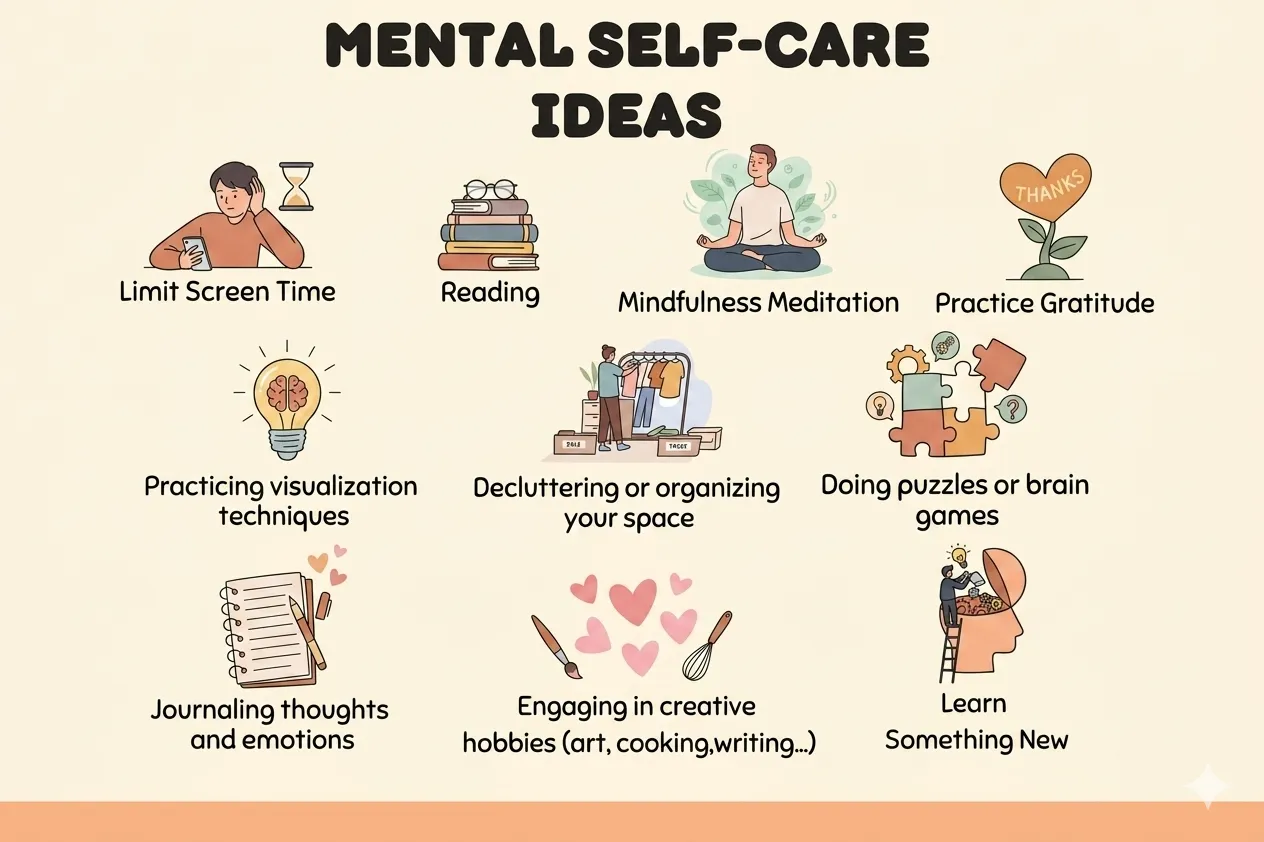
Additional Self-Care Strategies
Beyond the basics, there are many small actions you can take throughout the day to support your mental health:
- Set personal goals and create action plans
- Establish healthy boundaries
- Practice gratitude daily
- Spend time with loved ones
- Express yourself through art or journaling
- Take breaks from digital devices
- Spend time outdoors
- Stay hydrated
- Volunteer or help others
- Practice positive self-talk
Remember, consistency is more important than perfection.
When To Seek Professional Help
While self-care is powerful, it may not be enough if you’re experiencing persistent mental health challenges.
Consider seeking support from a healthcare provider or mental health professional if you notice:
- Ongoing sleep problems
- Significant changes in appetite or weight
- Difficulty functioning in daily life
- Loss of interest in activities you once enjoyed
- Trouble concentrating
- Persistent feelings of sadness or hopelessness
If these symptoms last for two weeks or more, professional support can help you regain balance and well-being.
Conclusion
Self-care is a vital part of living a healthy, balanced life. It helps you manage stress, improve your mood, and build resilience in the face of challenges.
The most important thing to remember is that self-care is personal. Start small, experiment with different habits, and find what works best for you.
By making self-care a daily priority, you’re investing in a healthier, happier, and more fulfilling life.