

This Should Perk You Up: The Surprising Health Benefits of Coffee
Introduction
For many people, coffee is more than just a morning ritual—it’s a daily essential. Whether it’s your first cup to start the day or an afternoon boost, coffee helps you stay alert and focused.
But beyond its energizing effects, is coffee actually good for your health?
According to research and nutrition experts like Devon Peart, moderate coffee consumption can offer several surprising health benefits. From supporting brain function to reducing the risk of chronic diseases, your daily cup might be doing more good than you think.
In this article, we’ll explore the science-backed benefits of coffee, potential risks, and tips to enjoy it in a healthy way.

Top Health Benefits of Coffee
1. Boosts Energy and Mental Performance
Coffee’s most well-known benefit comes from caffeine, a natural stimulant that:
- Increases alertness
- Improves focus
- Enhances mood
Caffeine also supports brain function by improving:
- Memory
- Reaction time
- Cognitive performance
Additionally, studies suggest it can enhance physical endurance, making it beneficial before workouts.
2. Provides Essential Nutrients
Although not a major source, coffee contains small amounts of important nutrients, including:
- Vitamin B2 (riboflavin)
- Vitamin B3 (niacin)
- Potassium
- Magnesium
Coffee is also naturally:
- Low in calories
- Free of cholesterol
- Sugar-free (unless added)
3. Rich in Antioxidants
Coffee is packed with antioxidants and phenolic compounds, which help:
- Protect cells from damage
- Reduce oxidative stress
- Fight inflammation
These plant-based compounds play a key role in maintaining overall health and preventing chronic diseases.
4. May Lower Risk of Type 2 Diabetes
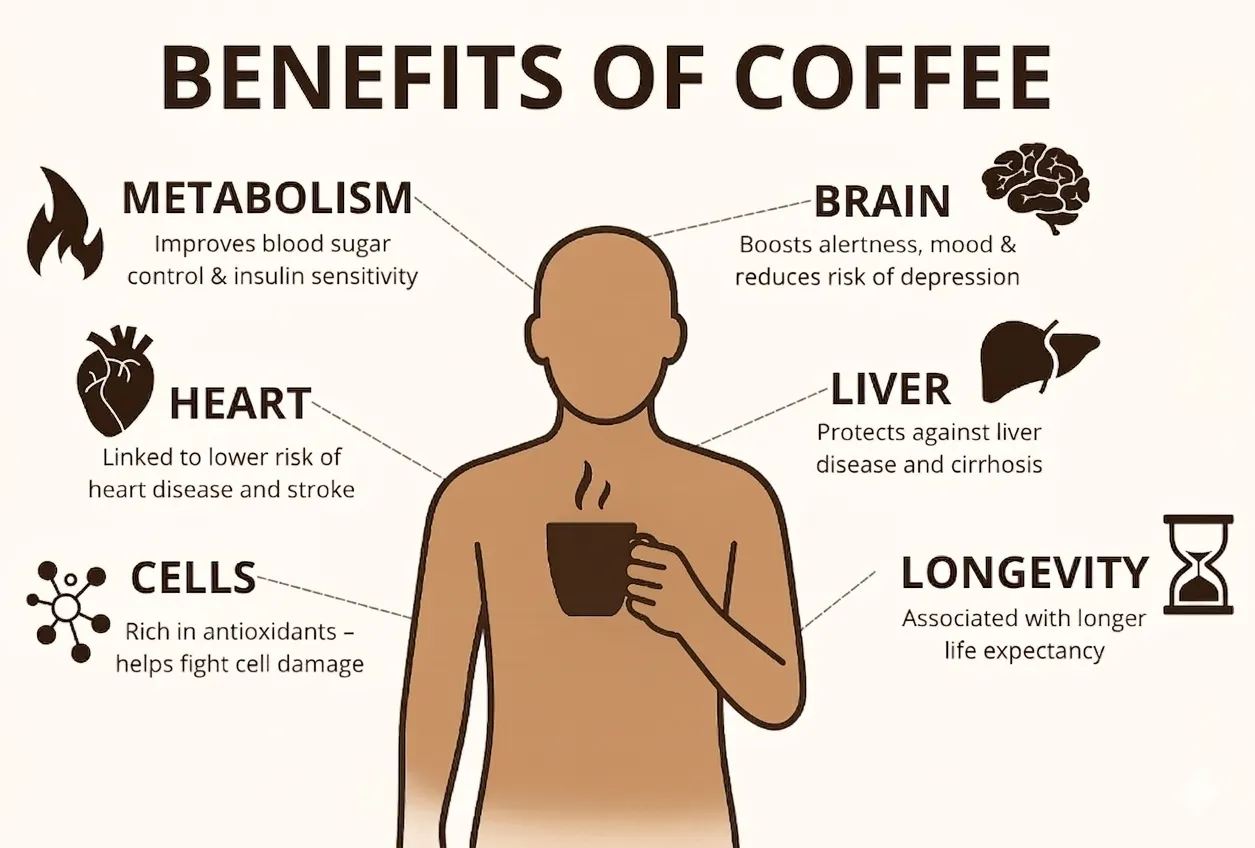
Multiple studies have shown that regular coffee consumption may reduce the risk of developing Type 2 diabetes.
Both regular and decaffeinated coffee appear to have protective effects, possibly due to their antioxidant content.
5. Supports Brain Health
Drinking coffee regularly may help protect against neurodegenerative diseases such as:
- Alzheimer’s disease
- Parkinson’s disease
Caffeine and other compounds in coffee may contribute to long-term brain health and cognitive function.
6. Promotes Liver Health
Your liver plays a crucial role in detoxifying the body—and coffee may help protect it.
Research suggests that coffee consumption may:
- Lower the risk of liver disease
- Protect against cirrhosis
- Support overall liver function
7. May Reduce Cancer Risk
Studies indicate that coffee drinkers may have a lower risk of certain cancers, including:
- Liver cancer
- Colorectal (colon) cancer
While more research is needed, these findings highlight coffee’s potential protective effects.
8. Helps Reduce Depression and Anxiety
That “feel-good” effect after drinking coffee isn’t just in your head.
Research shows that moderate coffee intake is linked to:
- Lower risk of depression
- Improved mood
- Reduced anxiety levels
9. Supports Heart Health
Recent studies suggest that moderate coffee consumption may:
- Lower blood pressure
- Improve blood vessel function
- Reduce risk of heart-related conditions
However, results may vary depending on individual sensitivity to caffeine.
10. May Counteract Sedentary Lifestyle Effects
If you spend long hours sitting, coffee may offer some protection.
Research indicates that coffee drinkers who sit for extended periods may have a lower risk of chronic diseases compared to non-coffee drinkers. Still, regular physical activity remains essential.
Are There Any Risks of Drinking Coffee?
While coffee has many benefits, it’s important to consume it in moderation.
1. Avoid Excessive Caffeine
Too much caffeine can cause:
- Anxiety or jitters
- Increased heart rate
- Sleep disturbances
Experts recommend limiting intake to under 400 mg of caffeine per day (about 3–4 cups of coffee).
2. Be Mindful During Pregnancy
Pregnant individuals should limit caffeine intake to about 200 mg per day, according to American College of Obstetricians and Gynecologists.
3. Don’t Drink Coffee Too Late
Caffeine can stay in your system for hours and may interfere with sleep. Try to avoid coffee in the late afternoon or evening.
4. Watch What You Add
Coffee itself is healthy—but added ingredients can change that.
Limit:
- Sugar
- Flavored syrups
- Whipped cream
- High-fat dairy
These can add unnecessary calories and reduce the health benefits.
Tips to Make Your Coffee Healthier
To get the most out of your coffee:
- Drink it mostly black or with minimal additives
- Use natural sweeteners like stevia (in moderation)
- Choose low-fat or plant-based milk
- Avoid high-calorie coffee drinks
Add Healthy Spices
Enhance your coffee with spices that offer extra benefits:
- Cinnamon: Supports blood sugar control
- Cardamom: Rich in vitamins and minerals
- Ginger: Anti-inflammatory properties
- Cocoa powder (unsweetened): Adds antioxidants
Conclusion
Coffee isn’t just a comforting daily habit—it’s a beverage packed with potential health benefits. From boosting energy and brain function to supporting heart and liver health, moderate coffee consumption can be a valuable part of a healthy lifestyle.
However, balance is key. Drinking too much or loading your coffee with sugar and cream can reduce its benefits.
The best approach? Listen to your body, keep it moderate, and enjoy your coffee in its healthiest form.